
Table of Contents
- Why Kids Don’t Cooperate (And Why It’s Not a Problem)
- How to Prepare Kids for Family Photos Before the Day Arrives
- What to Bring to a Family Photo Session With Kids
- How to Get a Toddler to Smile for Pictures Without the Fake Cheese
- Play, Don’t Pose: Getting Real Cooperation During the Session
- How Long Should a Family Photo Session Length With Kids Be?
- What to Say, What to Skip, and How to Handle a Refusal
- Frequently Asked Questions
Last Updated: October 21, 2026
Why Kids Don’t Cooperate (And Why It’s Not a Problem)
The short answer: kids don’t cooperate for family photos because a photo session asks them to sit still, stay quiet, and perform on cue, and that runs against everything a child naturally wants to do. It isn’t misbehavior. It’s normal.
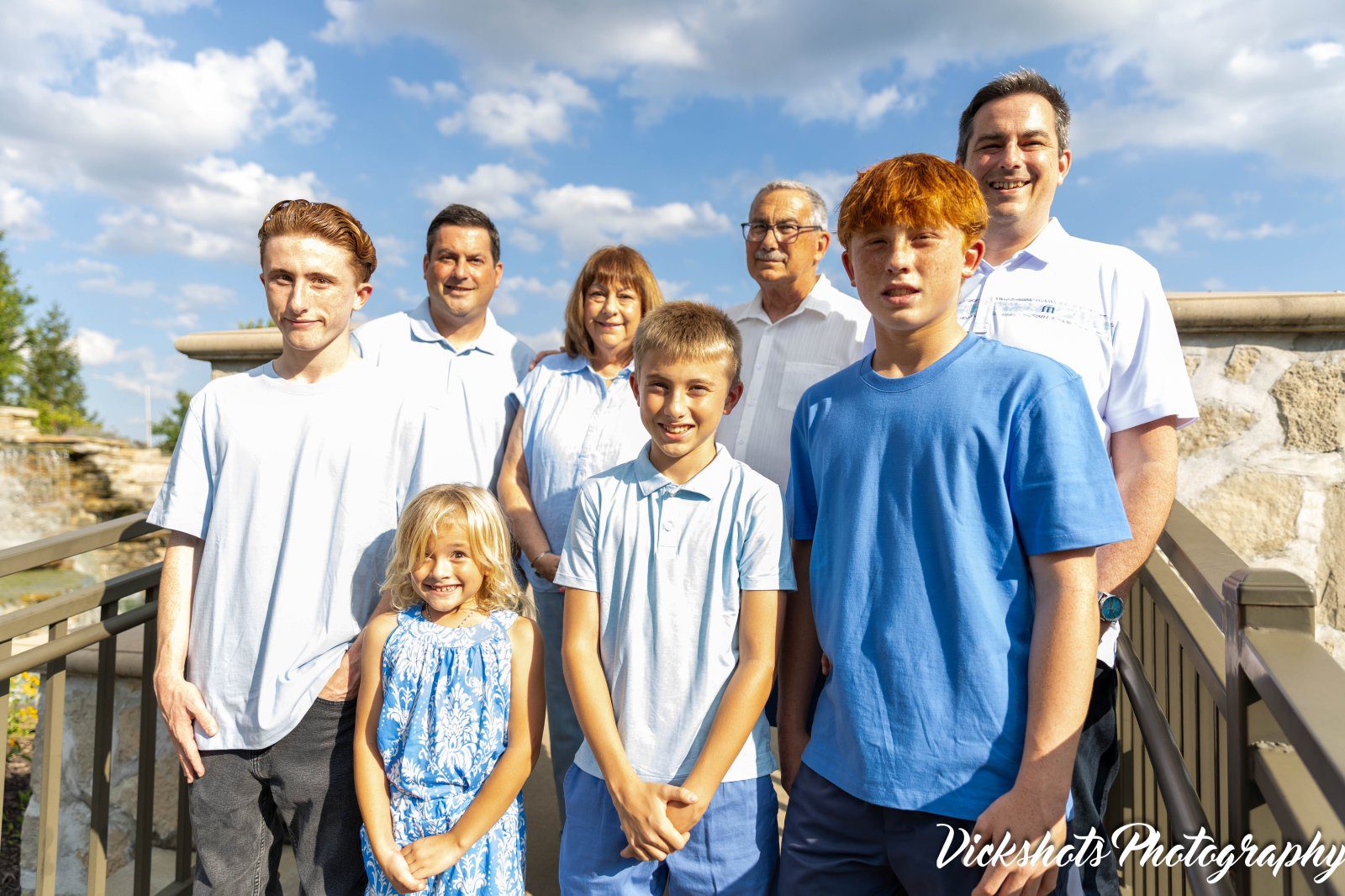
I’ve photographed a lot of families around the Kansas City metro, and I’ll tell you the same thing I tell every parent at the start: a wiggly kid is not ruining your session. At Vickshots, we plan for movement instead of fighting it.
Here’s what most guides get wrong. They treat cooperation as something you demand from a child. Really, it’s something you set up in advance, and then let happen.
When a child refuses to sit still, they’re telling you they’re bored, tired, or overwhelmed. All three are fixable. Below, I’ll show you how to get kids to cooperate for family photos without a single “say cheese.”
How to Prepare Kids for Family Photos in Advance
Preparation starts days before, not in the car on the way over. Kids do better with a heads-up, and a little rehearsal goes a long way.
A few things that genuinely help:
- Tell them what’s happening. “We’re getting pictures made Saturday. We’ll walk around, play a little, and I’ll be right there.” No mystery, no ambush.
- Show them a few photos. Let them see what a session looks like so it feels familiar.
- Pick outfits early. Let them have a say where it’s harmless. A kid who chose their own shirt is a kid who feels some ownership.
- Plan around naps and meals. A rested kid with a full stomach is a completely different child than a hungry, tired one.
- Talk it up, don’t drill it. Keep it light. This is fun, not a test.
One of the best tools we use is a short questionnaire every family fills out before the session. Favorite snacks, favorite shows, games the kids love. Those answers become our prompts on the day, and they’re especially useful for breaking the ice with teenagers who’d rather be anywhere else.
What to Bring to a Family Photo Session With Kids
Bring the small comforts, not the whole diaper bag. The goal is a few items that keep kids happy and comfortable without turning the session into a production.
Pack these:
- Snacks. Something low-mess and easy: crackers, fruit, a granola bar. Hungry kids don’t smile.
- Water. Simple, but easy to forget.
- A comfort item. A favorite small toy or blanket can settle a nervous little one.
- A change of clothes. Spills happen. Better to have it.
- Wipes. For faces and hands, not the outfit.
- A hairbrush. Quick touch-ups between shots.
Skip the juice boxes and anything sticky or bright orange. Trust me on that one.
For younger kids especially, the basics matter most: well rested, something in their stomach, and snacks on hand. Younger kids are usually easier than teenagers, honestly. The teens are where the questionnaire earns its keep.
How to Get a Toddler to Smile Without Fake Cheese
The best way to get a toddler to smile is to stop asking for a smile. Real smiles come from real moments, and toddlers hand them out freely when they’re playing, not performing. Ask a two-year-old to say cheese and you get a tight, toothy grimace that doesn’t look like your kid.
So what actually works? Here’s what I reach for, sorted by age, because a 14-month-old and a four-year-old need different tactics.
Babies (under about 18 months). They can’t take direction, so we work around their schedule. The best window is usually right after a nap and a feed, when they’re alert but not wired.
Toddlers (about 18 months to 3 years). This is the age of big feelings and short attention spans. Movement is your friend. I’ll ask a parent to swing them, chase them a few steps, or spin them once. The laugh that follows is genuine.
Preschoolers (3 to 5). Now they can play along, so give them a job. “Show me your best dinosaur stomp.” “Can you find a red leaf?” “What does a lion say?” A kid with a mission forgets the camera is there.
A few things that work across all three ages:
- Play peekaboo behind the camera. Let them find you.
- Ask about something they love. “Where’s your puppy?” lights up a face fast.
- Let them move. Chase, tickle, spin. Movement produces joy, and joy produces smiles.
- Give them a minute to warm up. Don’t shove a camera in a toddler’s face the second you arrive.
The fake “cheese” smile is the enemy. It’s tight, it’s not your kid, and you’ll see it in the photo for years. We’d rather catch the real thing a half-second later.
Play, Don’t Pose: Getting Real Cooperation During the Session
Cooperation comes from play, not posing. When kids are having fun, they forget the camera is there, and that’s when the good photos happen.
Here’s how we run it. I give families a small piece of direction, then let them make it their own. There are no bad poses. We might start with a game, a walk, a little spin. I’ll prompt a joke or ask the kids to show me their best silly face. The real expressions show up in the gaps between.
And yes, we always take the classic posed shot for the wall. Every family wants that one. But we earn it after everyone’s relaxed, not before.
The trick is attention. Kids give you a few good seconds at a time, so we work in short bursts and take breaks. We move around a location with several backgrounds in one place, like Loose Park with its gardens, fountains, and wooded areas, so nobody has to drive between spots and lose the mood.
How Long Should a Family Photo Session Length With Kids Be?
An hour is the sweet spot for most families with kids. Thirty minutes works for a quick mini session, but it leaves little room for warm-up.
Here’s what I’ve noticed over the years: the most natural, relaxed photos tend to happen between about the 35 and 60 minute marks. That’s the window when kids realize they have their parents’ full attention, and they settle into it. A 30-minute session can end right as that magic is starting.
|
Session |
Time |
Best For |
Edited Photos |
|---|---|---|---|
|
Mini |
30 minutes |
Quick updates, young toddlers |
25-30 |
|
Standard |
1 hour |
Most families with kids |
35-45 |
|
Extended |
1.5 hours |
Big families, teens, multiple looks |
50-75 |
All sessions include your choice of location, web and social downloads, gallery delivery in 5-7 business days, and a personal sharing release. A 50% deposit reserves your date.
If you’re on the fence, take the hour. The extra time is where the good stuff lives.
What to Say, What to Skip, and How to Handle a Refusal
Your words shape the whole session. A few phrases help, and a few make things worse. The reason is simple: pressure raises the stakes, and a kid who feels tested stops being themselves. So the goal isn’t to get them to perform. It’s to keep the room loose enough that they forget there’s anything to perform.
Here are the exact words I hand parents before we start.
Say this:
- “You’re doing great.”
- “Show me your silly face.”
- “Let’s play a game.”
- “Tell me about your favorite show.” (This is where the questionnaire pays off, I already know the answer.)
- “We’re almost done, then we get a treat.”
Skip this:
- “Say cheese.”
- “Sit still.”
- “Look at the camera and smile.”
- “If you don’t cooperate, we’re leaving.”
- “Why can’t you just smile for one picture?”
The last one is the quiet killer. It sounds reasonable, but a kid hears it as a verdict on their behavior, and the face that follows is closed off. Threats and bribes mid-session (“If you don’t smile, no ice cream”) do the same thing, kids hear the tension, and their faces show it. The photo ends up looking like a hostage negotiation.
When a child flat-out refuses. Stay calm. Don’t negotiate hard, and don’t apologize to the photographer, we’ve seen it all. Give the child a minute, switch to a different activity, or let a sibling take the spotlight for a bit. The refusal usually passes once the pressure’s off. I plan a loose session with backup options, and I read the room. If one spot isn’t working, we move. If a kid needs a break, we take one.
For kids who find the whole thing overwhelming. Some children, including kids on the autism spectrum, kids with sensory processing differences, or any child who just finds noise and new people stressful, need a different setup, and that’s fine. A few adjustments I make:
- Quiet the environment. Pick a spot away from crowds and loud traffic. Loose Park has quieter corners away from the fountains.
- Skip the surprise. Send a short note ahead of time describing what will happen, in order, so there are no unknowns.
- Let them keep a comfort item. A favorite toy or blanket in the frame is better than a meltdown out of it.
- Offer choices. “Do you want to stand by the tree or sit on the bench?” Control over small things lowers the pressure on big ones.
- Build in breaks. A few minutes to walk and reset often beats pushing through.
- Don’t force eye contact or a smile. Some kids show joy in their bodies, not their faces, and those photos are just as real.
If your child has specific needs, tell me before the session. I’d rather plan around them than find out on the day.
If you’re ready to put all this into practice, my Family Portraits sessions are built around exactly this kind of relaxed, kid-friendly approach, and when the kids are grown and it’s time to mark a graduation, my Seniors / Graduation sessions follow the same playbook.
FAQs: Getting Kids to Cooperate for Photos
What If My Child Won’t Cooperate for Photos?
Don’t force it. A calm response works better than bargaining or threats. Give your child a minute, let them step away, and let the photographer redirect with a game or a question. In my sessions, I plan for a few minutes of warm-up and keep a backup prompt ready. If a child flat-out says no, we shoot the parents and siblings for a bit, and usually the child wanders back in once the pressure is off. Refusal is normal, especially with toddlers and teens.
How can I keep kids engaged during a family photo session?
Keep them moving and keep them talking. Games, silly prompts, and short breaks do more than asking for a smile. I build sessions around small activities, like a family walk, a tickle break, or a quick question about their favorite show. When kids are engaged in something, their natural expressions show up on their own. A family photo session with kids works best when it feels like play, not a performance.
Should I tell my child to smile for family pictures?
Skip it. “Say cheese” usually gets a stiff, forced grin that doesn’t look like your kid. Instead, ask a question they’ll laugh at, or set up a moment where a real smile happens. I use the pre-session questionnaire to find out what makes each child light up, then work that into the shoot. Real smiles come from real reactions, not commands.
How do you help a shy teenager relax in family photos?
Teens often need a job or a reason to be there. I use the questionnaire to break the ice, then give them a small role, like picking a spot or holding a younger sibling. I also start with the classic posed shot so they know it’s handled, then move into looser prompts. Patience and a little humor go a long way. Most teens relax once they realize nobody’s going to make them do anything embarrassing.